
Climbing a flight of stairs leaves you gasping. A short walk to the front gate feels like a marathon. Even a normal conversation can be cut short by a tight chest and ragged breath. If chronic shortness of breath has slowly shrunk the size of your life, you are not alone — and there is genuine, evidence-based hope.
What Is Pulmonary Rehabilitation?
Who Needs Pulmonary Rehabilitation?
- Chronic Obstructive Pulmonary Disease (COPD) — including chronic bronchitis and emphysema
- Interstitial Lung Disease (ILD) or Idiopathic Pulmonary Fibrosis (IPF)
- Bronchiectasis or other long-term airway diseases
- Severe or uncontrolled asthma
- Post-COVID-19 lung damage with persistent breathlessness or fatigue
- Patients before or after lung surgery, including lung transplant or lung volume reduction surgery
- Lung cancer, before or after treatment
- Pulmonary hypertension
- Occupational lung diseases such as silicosis or pneumoconiosis
What Happens in a Pulmonary Rehabilitation Session?
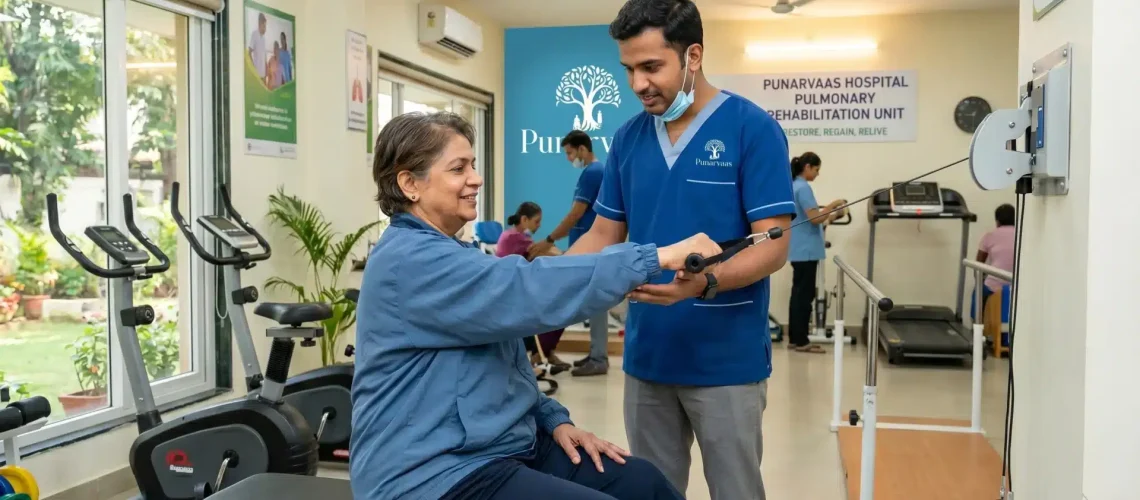
Every pulmonary rehabilitation programme is personalised — but a typical session has three core elements.
1. Aerobic Exercise
2. Strength and Flexibility Training
3. Education and Self-Management
Each session sets aside time to teach you the skills that turn pulmonary rehab into lifelong change:
- Pursed-lip and diaphragmatic breathing techniques
- Energy conservation strategies for daily activities
- How to use inhalers, nebulisers, and oxygen correctly
- Nutrition guidance for healthier lungs
- Anxiety and stress management
- Smoking cessation support
- Recognising early warning signs of a flare-up
The Benefits of Pulmonary Rehabilitation
Decades of research — and thousands of patient stories — confirm what pulmonary rehab can do:
- Less breathlessness during everyday activities
- Better exercise tolerance and stamina, with significant improvements in 6-minute walk distance
- Improved quality of life and mood, with reduced anxiety and depression
- Fewer hospitalisations and ER visits for flare-ups and exacerbations
- Stronger respiratory and skeletal muscles, reducing fatigue
- Better disease understanding — you spot warning signs early and act faster
- Peer support — meeting others with similar conditions reminds you that you are not alone
- Greater independence in daily activities
- Smoother recovery before and after lung surgery or transplant
Studies on patients with idiopathic pulmonary fibrosis, for example, have shown that pulmonary rehab improves exercise tolerance, lung function indicators, dyspnoea, and overall quality of life — with no adverse events reported across multiple trials. Similar results have been documented for COPD, post-COVID lung damage, asthma, and many other chronic lung conditions.
In short, pulmonary rehabilitation gives you back the things chronic lung disease tends to steal: confidence, energy, social connection, and the simple ability to enjoy a walk in the park.
The "Use It or Lose It" Principle
A pulmonary rehab programme is a beginning, not a finish line. The improvements you build over 6 to 12 weeks are real — but they only last if you keep moving.
Once your formal programme ends, the rehab team helps you build a maintenance plan you can do at home or in your community: a daily walk, your breathing exercises, your strength routine, and ongoing self-monitoring. Many patients also join community pulmonary support groups to stay motivated.
Consistency is everything. Skip your routine, and the gains slowly fade. Stay with it, and you protect your hard-won progress for years.
Pulmonary Rehabilitation at Punarvaas Hospital, Bangalore
At Punarvaas Hospital, Bangalore, we believe pulmonary rehabilitation should be accessible, evidence-based, and deeply human. Our programme brings together pulmonologists, respiratory therapists, certified physiotherapists, dietitians, and mental-health professionals under one roof, so every patient receives a fully personalised plan.
Whether you are recovering from COVID-19, managing COPD or pulmonary fibrosis, preparing for lung surgery, or simply tired of being short of breath, our team can help you breathe easier and live fuller. We serve patients from across Bangalore and other Indian cities through both in-hospital and structured tele-rehabilitation options, so distance is rarely a barrier to high-quality care.
Frequently Asked Questions (FAQ)
Q1. Is pulmonary rehabilitation safe?
Q2. How long before I notice results?
Q3. Do I need a doctor's referral?
Q4. Will I have to stop my medications?
Q5. Can I do pulmonary rehabilitation at home?
Q6. Is pulmonary rehab covered by insurance in India?
Q7. I am on oxygen. Can I still join?
Disclaimer: This article is for educational purposes only and is not a substitute for professional medical advice, diagnosis, or treatment. Always consult a qualified pulmonologist or healthcare provider regarding your specific condition.
Begin Your Recovery Journey with Punarvaas Hospital
If you or a loved one is living with a spinal cord injury, the right care can make all the difference. Speak with our SCI rehabilitation team today.
