

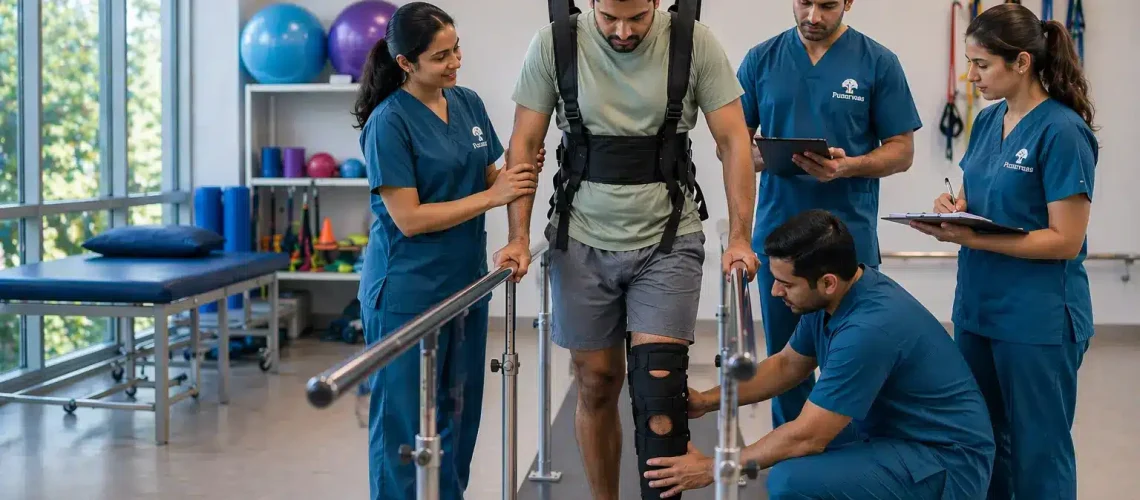
A spinal cord injury (SCI) is far more than a neurological event — it is a life-altering condition that reshapes movement, independence, identity, and the way a person participates in the world around them. While the injury itself happens in a single moment, the road to recovery unfolds over months and years, and it is spinal cord injury rehabilitation that determines how far that journey can go.
At Punarvaas Hospital, Bangalore, we believe SCI rehabilitation is not just about healing the spine — it is about rebuilding a life with purpose, dignity, and independence. In this guide, we walk you through how modern, holistic, team-based rehabilitation transforms outcomes for individuals living with spinal cord injuries.
Understanding Spinal Cord Injury
- Paraplegia (loss of function in the lower body) or tetraplegia (loss of function in all four limbs)
- Loss of sensation
- Bladder and bowel dysfunction
- Respiratory compromise, particularly in higher cervical lesions
- Secondary complications such as spasticity, pressure ulcers, and joint contractures
Assessment of Spinal Cord Injury: The Foundation of Recovery
Neurological Assessment
The gold standard in SCI evaluation is the ASIA (American Spinal Injury Association) Impairment Scale, which classifies injuries from ASIA A (complete) to ASIA E (normal). This scale evaluates:
- Motor function across key muscle groups
- Sensory function (light touch and pinprick)
- Level and completeness of injury
This classification helps clinicians predict functional outcomes and design a targeted rehabilitation pathway.
Functional Assessment
Beyond the neurological picture, functional assessment focuses on what the person can actually do, including:
- Bed mobility
- Transfers between bed, wheelchair, and toilet
- Sitting and standing balance
- Activities of daily living (ADLs) such as eating, dressing, and grooming
Assessment of Secondary Complications
Spinal cord injuries often bring secondary challenges that need to be monitored and managed throughout recovery, including:
- Skin integrity and risk of pressure ulcers
- Muscle tone and spasticity
- Joint range of motion
- Cardiovascular responses such as orthostatic hypotension
- Bladder and bowel function
A thorough, ongoing assessment process ensures rehabilitation goals stay realistic, responsive, and aligned with the patient’s evolving needs.
A Glimpse into the ICF Framework in SCI Rehabilitation
Modern SCI rehabilitation goes beyond the medical chart. The ICF (International Classification of Functioning, Disability and Health) is a globally recognised framework that helps clinicians look at the whole person, not just the injury.
The ICF model considers:
- Body Functions and Structures: paralysis, sensory loss, autonomic dysfunction
- Activities: the ability to transfer, perform self-care, and move around
- Participation: returning to work, family roles, hobbies, and community life
It also accounts for environmental factors (such as home accessibility, ramps, assistive devices, and family support) and personal factors (such as motivation, coping style, and lifestyle preferences).
Even a brief application of the ICF framework helps clinicians shift the question from “What is the deficit?” to “How can this person function and participate meaningfully?” — a powerful change in perspective that places the patient at the centre of recovery.
Spinal Cord Injury Rehabilitation: Phases of Recovery
SCI rehabilitation is a goal-oriented journey that evolves over time. At Punarvaas Hospital, our rehabilitation programmes are structured into three carefully planned phases.
1. Early Phase
The early phase focuses on stabilisation and prevention. Key priorities include:
- Prevention of complications such as pressure sores and joint contractures
- Respiratory management, particularly in high-level injuries
- Passive range-of-motion movements to maintain joint mobility
- Skin and bladder care to prevent secondary issues
2. Active Rehabilitation Phase
Once the patient is medically stable, active rehabilitation begins. This is where measurable functional gains start to emerge:
- Strengthening preserved muscle groups
- Balance and trunk control training
- Transfer training (bed to wheelchair, wheelchair to car)
- Wheelchair mobility and propulsion skills
- ADL training to rebuild independence in self-care
3. Long-Term Rehabilitation
The final phase is about returning to life — not just leaving the hospital behind, but real reintegration into the community. Long-term rehabilitation includes:
- Community reintegration support
- Vocational rehabilitation and return-to-work planning
- Fitness and wellness programmes designed for SCI
- Long-term complication prevention and follow-up care
Recovery is not always about walking again. Often, success is about maximising independence at every level — and finding new ways to live fully and confidently.
The Multidisciplinary Team: The Core of SCI Rehabilitation
No single specialist can deliver effective spinal cord injury rehabilitation alone. The most successful outcomes come from a multidisciplinary team working in coordination, with the patient and family at the centre.
At Punarvaas Hospital, our SCI rehabilitation team includes:
- Physiatrist (Rehabilitation Physician): leads the rehabilitation plan and oversees medical management.
- Physiotherapist: focuses on mobility, strength, balance, and functional training.
- Occupational Therapist: enhances independence in daily activities and recommends assistive devices.
- Psychologist / Counsellor: supports emotional adjustment, mental health, and family wellbeing.
- Speech Therapist: assists in cases involving respiratory or communication challenges.
- Social Worker: facilitates community reintegration, vocational support, and access to resources.
- Orthotist / Prosthetist: designs supportive devices such as braces and orthoses.
The patient and their family are not passive participants — they are central members of the team, involved in setting goals and shaping every step of the journey.
Why Choose Punarvaas Hospital for Spinal Cord Injury Rehabilitation in Bangalore
Choosing the right rehabilitation centre can make all the difference in long-term recovery. Punarvaas Hospital offers:
- A dedicated, in-house multidisciplinary SCI rehabilitation team
- Personalised, ICF-based assessment and goal setting
- Advanced equipment for gait training, balance, and functional mobility
- Compassionate care for both patients and their families
- Long-term follow-up to support reintegration and prevent complications
Whether you are searching for the best spinal cord injury rehab in Bangalore or exploring rehabilitation options from across India, our team is here to guide you with empathy, expertise, and evidence-based care.
Frequently Asked Questions (FAQ)
What is spinal cord injury rehabilitation?
Spinal cord injury rehabilitation is a structured, multidisciplinary process designed to help individuals with SCI regain maximum independence, manage secondary complications, and return to meaningful participation in daily life.
How long does spinal cord injury rehabilitation take?
The duration depends on the level and severity of the injury, but most patients benefit from intensive rehabilitation for several months, followed by long-term follow-up and community-based support.
Can a person with a complete spinal cord injury recover?
While complete recovery of nerve function may not always be possible, structured rehabilitation can significantly improve independence, mobility, and quality of life — even for ASIA A injuries.
What is the ASIA scale in SCI?
The ASIA Impairment Scale is the gold-standard tool used to classify the severity of spinal cord injuries, ranging from ASIA A (complete) to ASIA E (normal function).
Where can I find expert spinal cord injury rehabilitation in Bangalore?
Punarvaas Hospital offers comprehensive, multidisciplinary spinal cord injury rehabilitation in Bangalore, with personalised programmes for paraplegia, tetraplegia, and related conditions.
Conclusion: Rebuilding a Life, Not Just Recovering Function
Spinal cord injury rehabilitation is not just about recovery — it is about rebuilding a life with purpose and independence. With accurate assessment, a holistic framework like the ICF, and a strong multidisciplinary team, individuals with SCI can move beyond limitations and achieve meaningful participation in society.
In SCI rehabilitation, success is not defined by the level of injury — it is defined by the level of independence and quality of life achieved.
Begin Your Recovery Journey with Punarvaas Hospital
If you or a loved one is living with a spinal cord injury, the right care can make all the difference. Speak with our SCI rehabilitation team today.
