

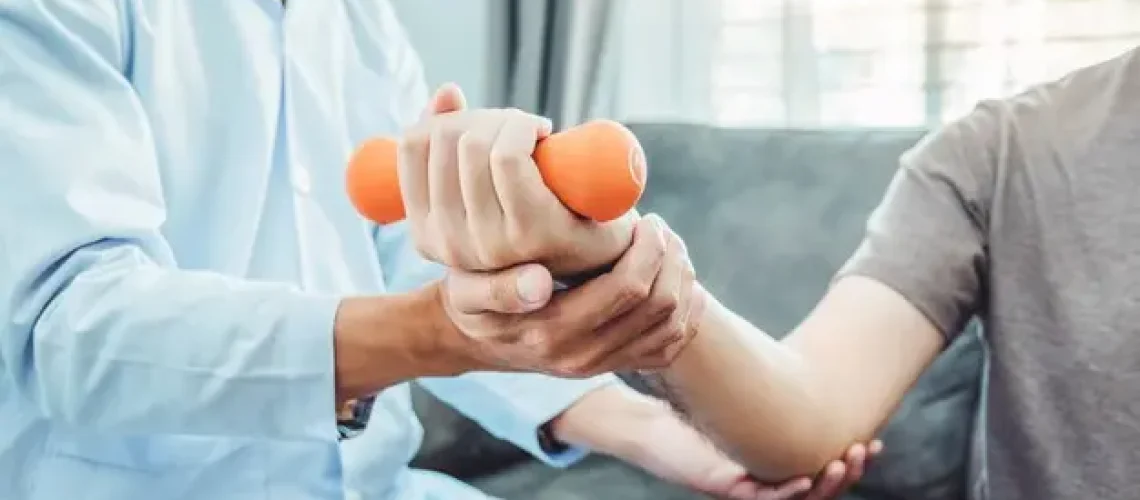
Neurorehabilitation is a structured, multidisciplinary process aimed at helping individuals regain function, independence, and quality of life after disorders affecting the nervous system. When the brain, spinal cord, or peripheral nerves are involved, recovery is often complex—and rehabilitation becomes the cornerstone of meaningful recovery.
What is Neurorehabilitation and Why is it Essential?
Neurological conditions do not just affect a single organ—they impact movement, thinking, behavior, communication, and social participation. Recovery requires more than medical treatment alone.
Neurorehabilitation is crucial for individuals with:
- Brain disorders: Stroke, Traumatic Brain Injury (TBI), Parkinson’s Disease, Alzheimer’s Disease, encephalitis, meningitis, hypoxic ischemic encephalopathy
- Spinal cord disorders: Spinal Cord Injury, Transverse Myelitis
- Peripheral nerve disorders: Guillain-Barré Syndrome (GBS), multiple sclerosis, polyradiculopathy, nerve entrapment syndromes, critical illness neuropathy
These conditions may lead to weakness, paralysis, spasticity, impaired coordination, speech and swallowing problems, cognitive deficits, and loss of independence. Rehabilitation addresses these in a systematic, goal-driven way.
The Foundation: International Classification of Function (ICF)
Modern neurorehabilitation follows the International Classification of Function (ICF) framework, ensuring a holistic approach beyond just diagnosis.
Assessment includes:
- Impairments: Weakness, pain, spasticity, sensory deficits
- Activity limitations: Difficulty in mobility, transfers, self-care
- Participation restrictions: Challenges in work, social roles, and community life
- Environmental and social barriers: Accessibility, caregiver support, home setup
This approach ensures that treatment is personalized and meaningful.
The Multidisciplinary Team Approach
Neurorehabilitation is delivered through a coordinated multidisciplinary team, led by a Physical Medicine & Rehabilitation (PMR) physician.
Team Roles
Rehabilitation Physician (PMR Specialist)
Designs and leads the treatment plan, manages medical issues such as infections, electrolyte imbalances, diabetes, hypertension, tube care and weaning, spasticity, and pain. Performs procedures when required.
Physiotherapists (PT)
Focus on joint mobility, tone regulation, motor control, trunk balance, strength, endurance, and walking.
Occupational Therapists (OT)
Work on functional independence—hand use, task-specific training, cognitive rehabilitation, home and workplace modifications, wheelchair skills, and transfers.
Speech and Language Pathologists (SLP)
Address communication disorders and swallowing dysfunction.
Rehabilitation Nurses
Provide ongoing care, administer medications, and educate patients and caregivers.
Psychologists
Manage emotional health, provide counseling, and assist with cognitive rehabilitation.
Orthotists
Design splints and supportive devices to improve positioning and function.
Rehabilitation Engineers
Develop and customize assistive technologies and devices.
Social Workers
Support caregiver well-being, facilitate community reintegration, assist with welfare schemes, and provide education.
How Rehabilitation Programs are Designed
Rehabilitation is goal-oriented, time-bound, and task-specific.
Common Goals:
- Improving bed mobility
- Achieving safe transfers
- Regaining self-care independence
- Walking or wheelchair mobility
- Training caregivers
Care Settings:
- Inpatient Rehabilitation: For medically complex or severely disabled individuals
- Outpatient Rehabilitation: For stable patients with moderate impairment
- Home-Based Rehabilitation: For continuity and long-term recovery
Patients with severe disability often begin with inpatient care and transition to outpatient or home-based programs, while those with milder deficits may start directly with outpatient care.
Core Components of Neurorehabilitation
Standard rehabilitation programs include:
- Gradual verticalization
- Tone normalization and spasticity management
- Movement facilitation
- Strength and endurance training
- Trunk control and stability training
- Task-oriented therapy
- Gait training and ambulation
- Aerobic conditioning
- Activities of Daily Living (ADL) training
- Swallowing (dysphagia) management
Therapy is typically delivered for 3–4 hours per day, adjusted to the patient’s tolerance and condition.
Advances in Neurorehabilitation
Recent advancements act as adjuncts to conventional therapy:
- Robot-assisted gait training
- Robotic upper limb rehabilitation
- Neuromodulation: rTMS, VNS, tDCS
- Hyperbaric Oxygen Therapy (HBOT)
- Brain-Computer Interfaces (BCI)
These technologies enhance recovery but do not replace structured rehabilitation.
Choosing the Right Rehabilitation Centre
Key factors to consider:
- Multidisciplinary team availability
- Leadership by a PMR physician
- Structured, goal-based programs
- Adequate therapy intensity (3–4 hours/day)
- Cost-effectiveness
⚠️Stem cell therapy in neurological rehabilitation remains experimental and is not part of standard care.
The Larger Goal: Beyond Physical Recovery
The ultimate aim of neurorehabilitation is not just recovery of movement—but restoration of life.
Key outcomes include:
- Community reintegration
- Return to work and productivity
- Reduced caregiver burden
- Sustained family and social functioning
Long-term follow-up, home programs, and continued engagement are essential for sustained outcomes.
Conclusion
Neurorehabilitation is the bridge between illness and independence. Through structured, multidisciplinary care and patient-centered planning, it enables individuals to reclaim their function and dignity.
While technology continues to evolve, the foundation remains clear: consistent, goal-driven rehabilitation led by a skilled team is the key to recovery.
